

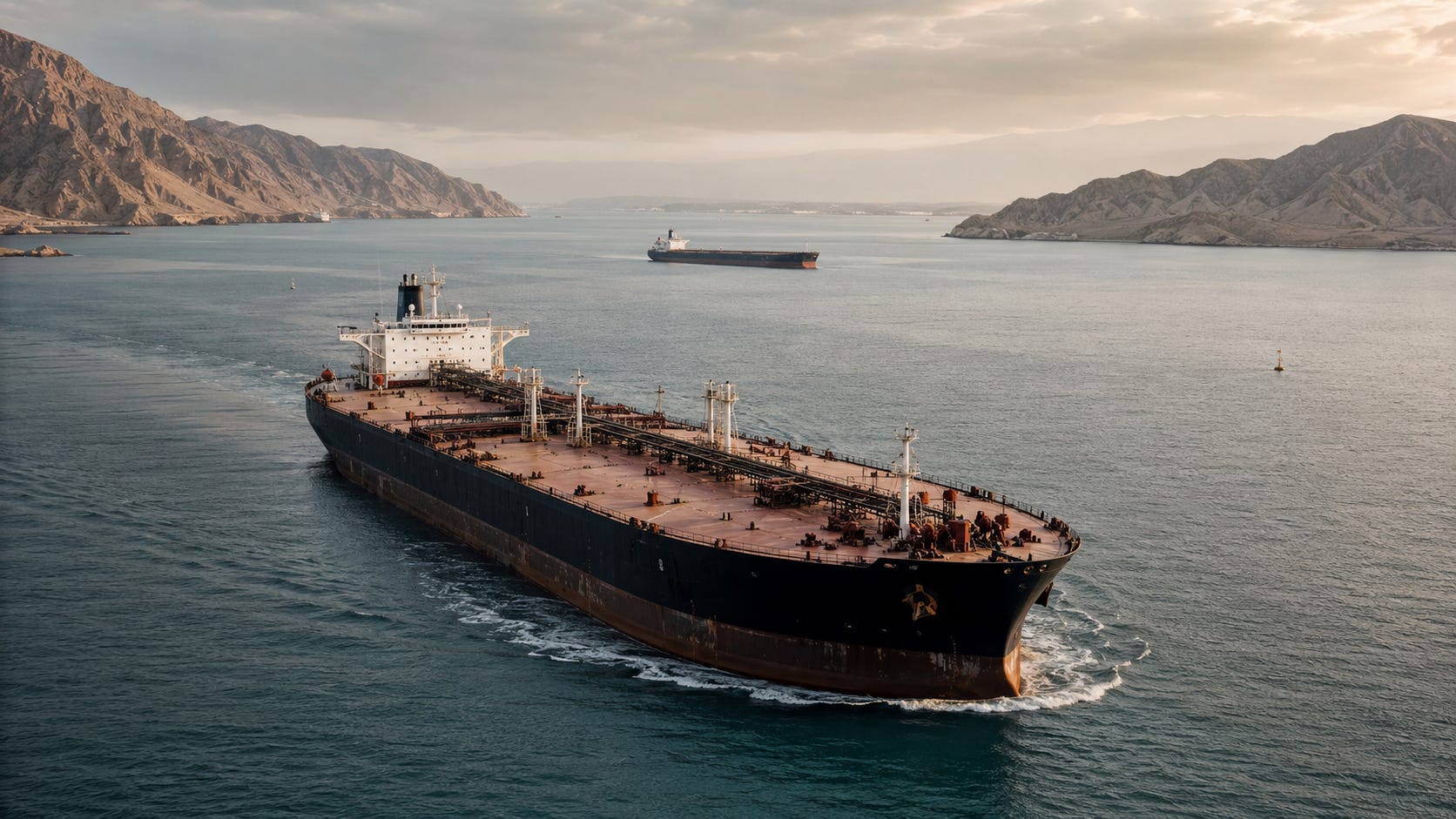
The US and Iran signed their interim deal this week. The Strait of Hormuz is reopening. Brent has dropped below $79, roughly 40% off the conflict peak. Shipping operators are repositioning vessels toward the Gulf.
The stagflation narrative ran on a specific combination: rising energy costs layered on top of tariff pass-through, sticky services prices, and central banks forced to stay restrictive into a deteriorating growth environment. The war amplified every one of those pressures. The peace deal, or at least this 60-day memorandum of understanding, removes the amplifier. Crude feeds into gasoline, diesel, transport, fertiliser, LNG and broader input costs faster than almost any other macro channel (Italy was the most exposed to this), and the reversal works through the same transmission in the opposite direction.
Consumers feel it first. Energy works like a regressive tax on households, and when gasoline prices fall, real disposable income improves at the margin before the broader data catches up (gasoline price in the us are lower than mid April when the Hormutz blockade started thiough) Companies get margin relief. Headline inflation loses its most visible upward pressure. Duration trades get breathing room. The whole positioning structure that had built up around the Gulf disruption, long energy, short duration, defensive credit, underweight cyclicals, starts to look dated rather than prudent.
Europe benefits more directly than the US because it imports its energy. Lower gas prices support margins, consumers and fiscal balances across the eurozone. For Italy the channel runs through ECB expectations: lower energy inflation reduces the pressure on the governing council and can help BTP spreads, as long as broader risk appetite holds.
A rotation would favour Cyclicals, consumer discretionary, industrials, small caps and long-duration growth were all penalised by the energy shock and are the natural recipients of a regime unwind. Inflation breakevens should compress. Oil and energy equities lose the narrative advantage they carried during the disruption. Pure defensives start giving back part of their war premium.
None of which means the inflation problem is gone. Core remains too high. Services, wages, rents, insurance, healthcare, shelter and tariff-sensitive goods do not reprice lower because crude has fallen. Companies that raised prices during the shock have little incentive to reverse them. The Fed, the ECB and the Bank of England are not going to pivot on a single geopolitical event when the inflation problem has broadened into categories that move slowly and respond to different forces entirely.
The historical record reinforces the caution. Energy shock reversals tend to kill headline inflation within months, but they do not always reach the core.
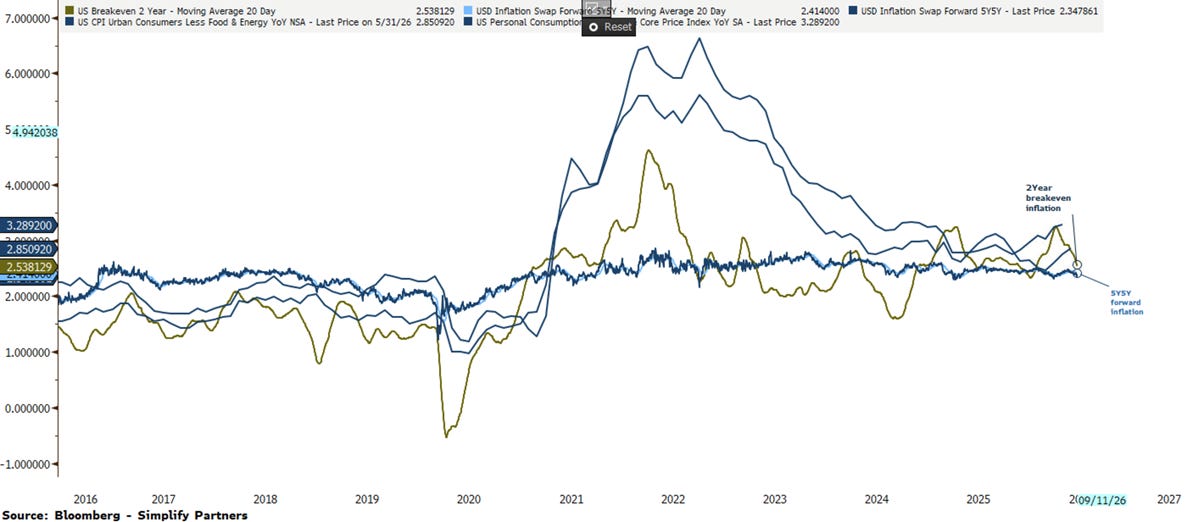
Inflation is under control and is expected to decrease form present 3.3 core (or 2.8 CPI) to 2.5 of the 2 years breakeven of 2.38 of the 5 year forward.
The 1990 Gulf War reversed quickly and left no lasting inflation scar. The 1970s showed what happens when expectations and wages have already adjusted: energy relief alone is not enough. Today’s setup is structurally closer to 1990, with one difference that matters. The inflation problem did not begin with this war. It was already present in services, wages, tariffs and fiscal dynamics before the first strike on Iran. The deal can remove the amplification. It cannot erase what was already underneath.
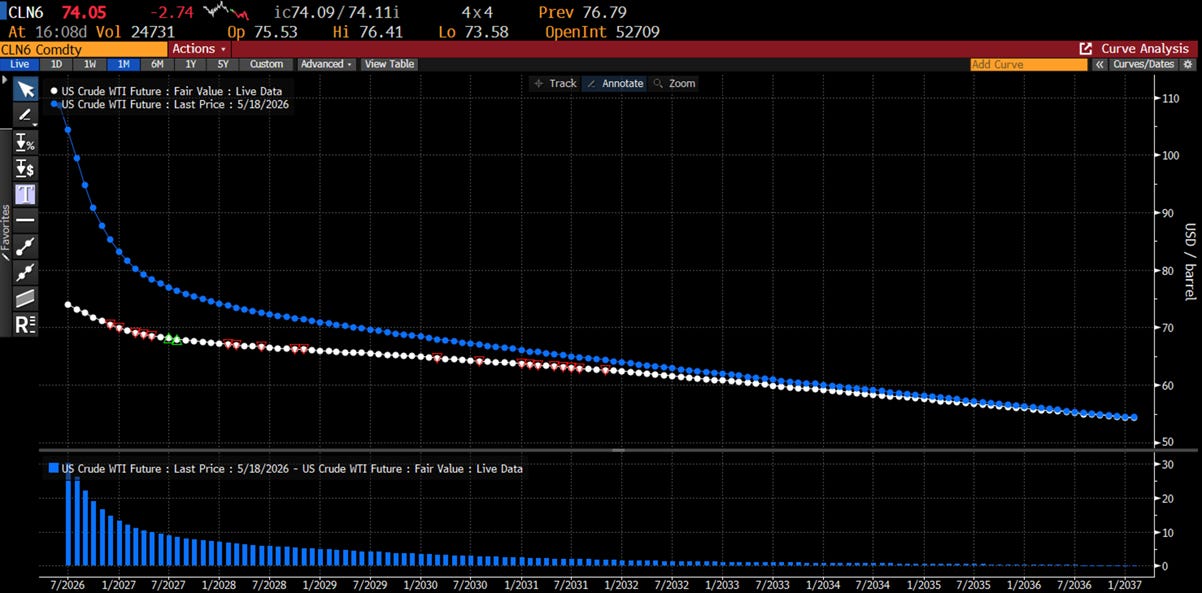
And the deal itself is not a final settlement. Mines remain in the strait. Nuclear talks are unresolved. The durability of the agreement is far from certain and could keep the actual price of oil above what the curve of the future shows for the next 12 months.
The curve flattened substantially from the deep backwardation of the last month
BIMCO, the world’s largest shipping association, warned this week that the security situation remains volatile and the details are insufficient.
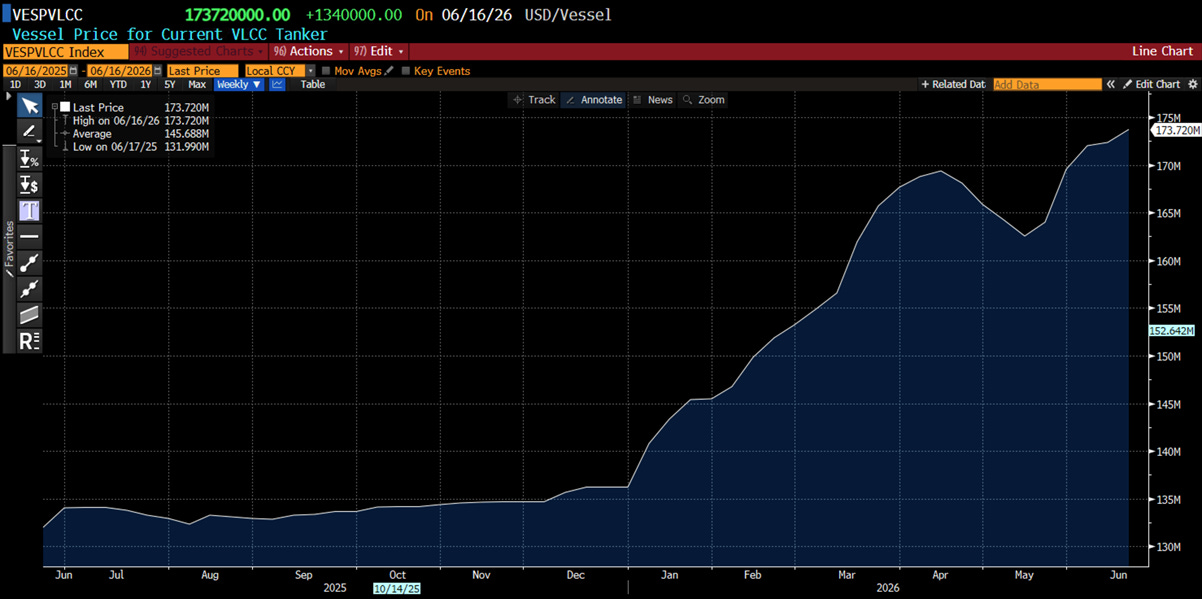
Tanker rates are still high
If Brent rebounds above $85 to $90, if the MoU collapses inside the 60-day window, if services inflation stays hot, or if central banks signal that tightening is not finished, the unwind will look premature.
The headline relief is arriving but core has not confirmed the turn. Central banks are watching but not acting. What comes next is probably not stagflation panic and probably not a disinflationary boom. It is something in between: a market moving from inflation fear toward selective risk appetite, where the rotation inside equities matters more than the direction of the index, and where the gap between what oil prices are doing and what services prices are doing becomes the single most important macro divergence to track over the summer.